
Niobium has relatively good machinability among refractory metals. Although not as corrosion-resistant as tantalum, it still offers high corrosion resistance and heat resistance at a lower material cost
Niobium C103 is an alloy composed of 89% niobium, 10% hafnium, and 1% titanium. It exhibits excellent performance in extremely high-temperature environments.
Niobium (Nb)
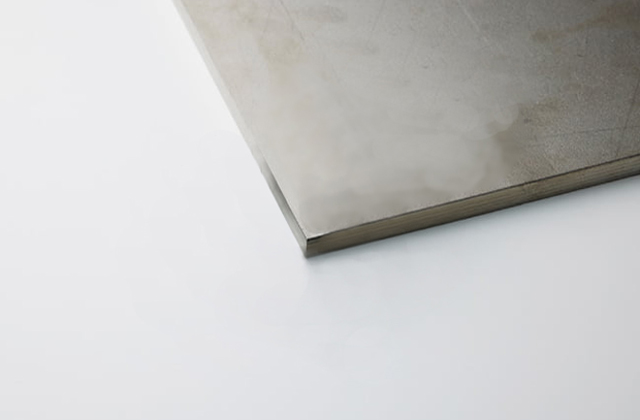
Heat resistance · Superconductivity · Corrosion Resistance · Biocompatibility
Typical properties of niobium
| Item | Purity (%) |
Bulk Density (g/㎤) |
Vickers Hardness (GPa) |
Young’s Modulus (GPa) |
Melting Point (℃) |
Recrystallization Temperature (℃) | Coefficient of Thermal Expansion (10-⁶/℃) | Thermal Conductivity (W/(m·K)) |
Volume Resistivity (Ω・㎝) |
|---|---|---|---|---|---|---|---|---|---|
| Chemical Formula | |||||||||
| Nb | 99.95– | 8.47 | 0.5–0.8 | 103 | 2,415 | 900 ~ 1,400 |
7.1 (RT) |
52 (20℃) |
14.1×10-⁶ (20℃) |
| Niobium C103 |
Nb 89% Hf 10% Ti 1% |
8.85 | - | - | 2,349 | 1,038 - 1,316 |
4.5 | 38.5 | 3×10-⁵ |
Applications Utilizing Material Properties
| Item | Features | Applications |
|---|---|---|
| High Heat Resistance Superconductivity High corrosion resistance High biocompatibility |
· Usable at High Temperatures · Suitable for environments requiring corrosion resistance |
· Components for High-Temperature Use · Components Requiring High Precision · Components requiring corrosion resistance · Superconducting magnets and wires |
| · Niobium C103 is widely used in aerospace applications |
· Liquid rocket thruster nozzles · Lightweight propulsion systems · Rocket engine thrust chambers and turbopumps |
|
| Good Machinability |
· Good machinability allowing complex shapes。 · Better weldability than tungsten and molybdenum |
|
| Chemical Resistance | ||
Machinable Sizes
| Item | Sizes (mm) | Item | Sizes (mm) |
|---|---|---|---|
| Plate Dimensions | 500 × 800 × 30 | Hole Diameter | Φ0.03– |
| Rod Dimensions | Φ100 ×500 | Hole Depth | –300 |
| Grooves | Width 0.1– | Number of Holes | –10,000 |
| Step | –100 | Threads | M1.6– |