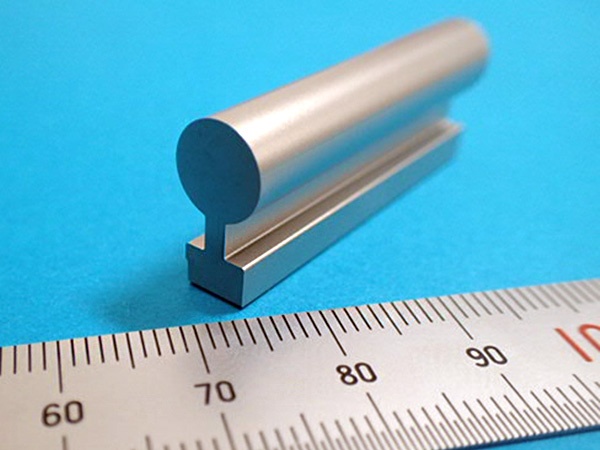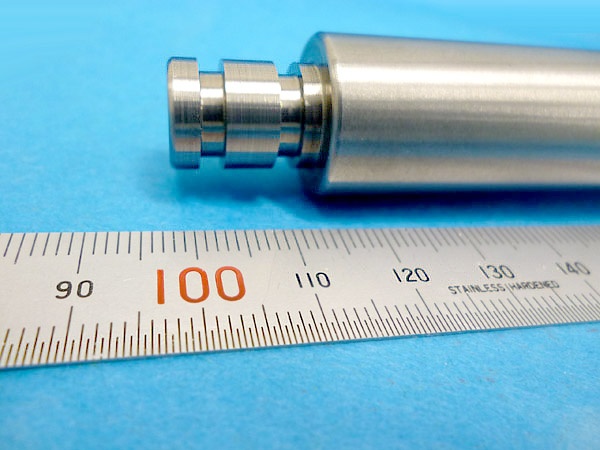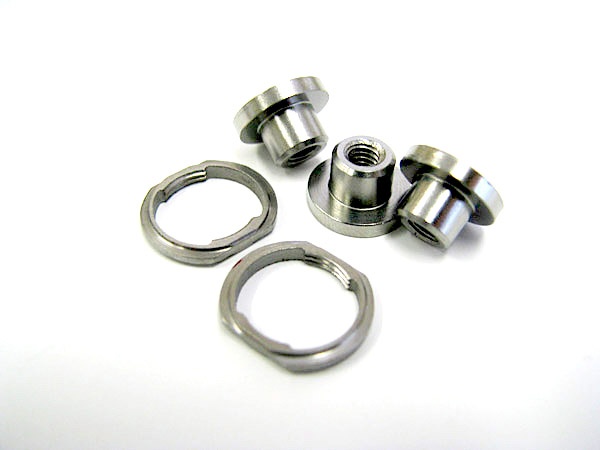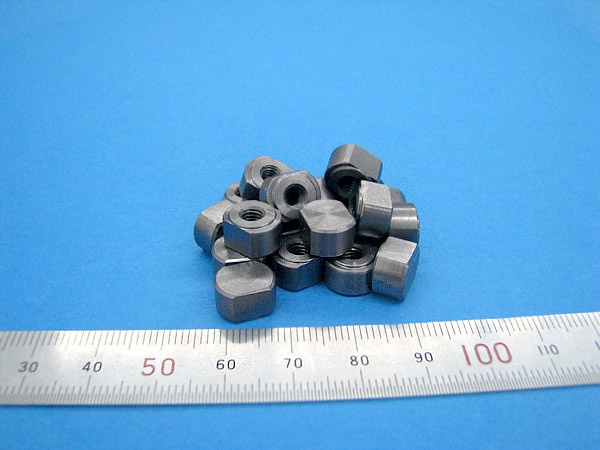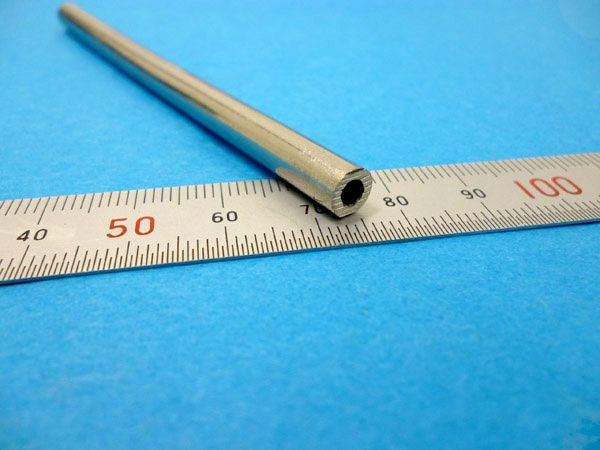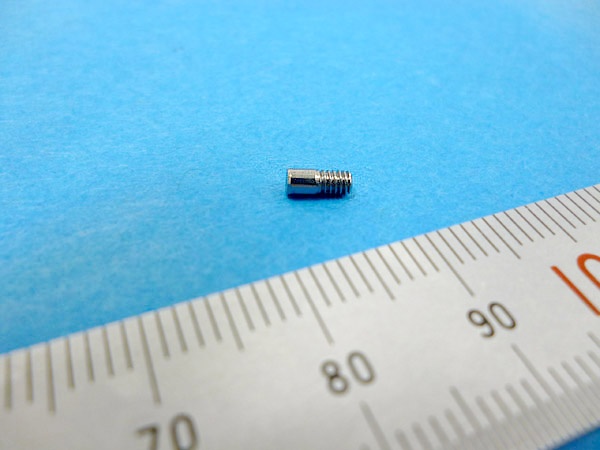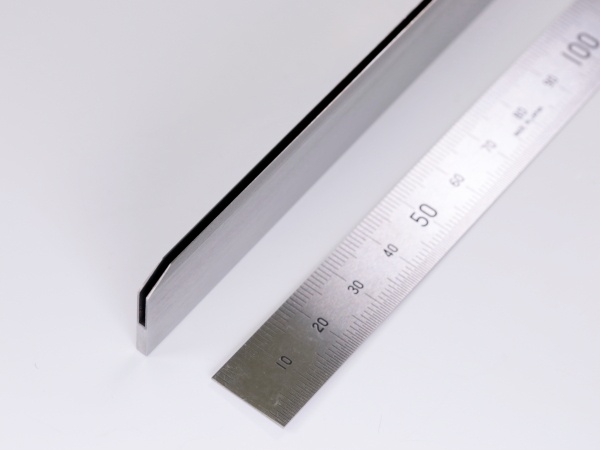
We introduce machining examples of tantalum
Tantalum is a refractory metal like tungsten and molybdenum, but unlike sintered tungsten and molybdenum, it is produced through melting processes, resulting in fewer material defects. It has good ductility and machinability
Due to high material cost, it is mainly used for small parts in high-temperature applications.
Tantalum (Ta)
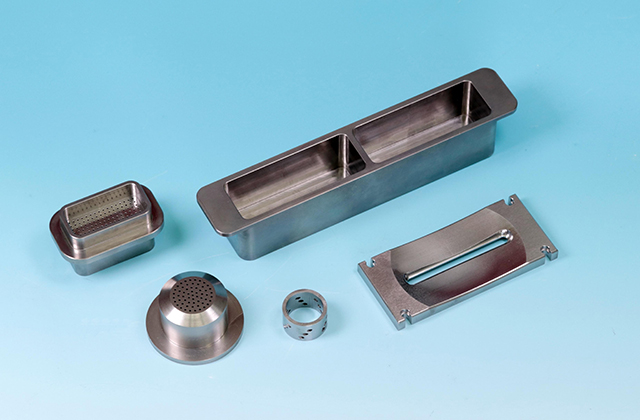
Heat resistance · Machinability
Typical properties of tantalum
| Item | Purity (%) |
Bulk Density (g/㎤) |
Vickers Hardness (GPa) |
Young’s Modulus (GPa) |
ductility (%) |
Melting Point (℃) |
Recrystallization Temperature (℃) |
Coefficient of Thermal Expansion (×10-⁶/℃) |
Thermal Conductivity (W/(m·K)) |
Volume Resistivity (Ω・㎝) |
|---|---|---|---|---|---|---|---|---|---|---|
| Chemical Formula | ||||||||||
| Ta | 99.9– | 16.6 | 0.69–1.2 | 185 | 20 | 3,017 | 900–1,450 | 6.3 (RT~600℃) |
54 (RT) |
13.1 ×10-⁶ |
Machinable Sizes
| Item | Sizes (mm) | Item | Sizes (mm) |
|---|---|---|---|
| Plate Dimensions | 100 ×100 ×10 | Hole Diameter | Φ0.05– |
| Rod Dimensions | Φ20 × 200 | Hole Depth | –300 |
| Grooves | Width 0.05– | Number of Holes | 1–1,000 |
| Steps (Protrusions / Recesses) | –30 | Threads | M1– |