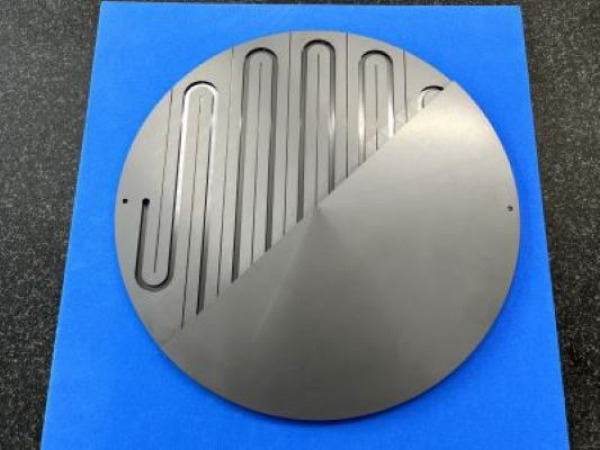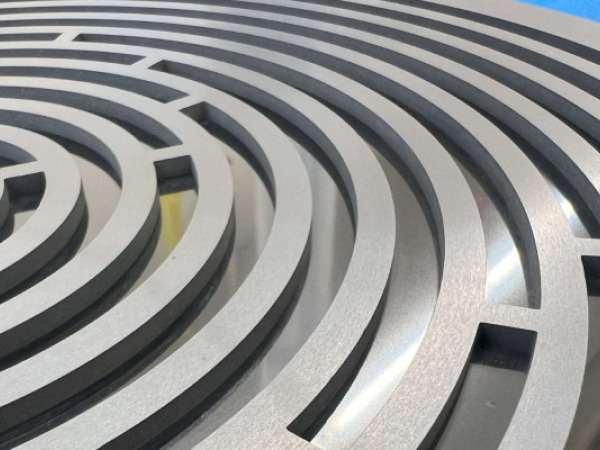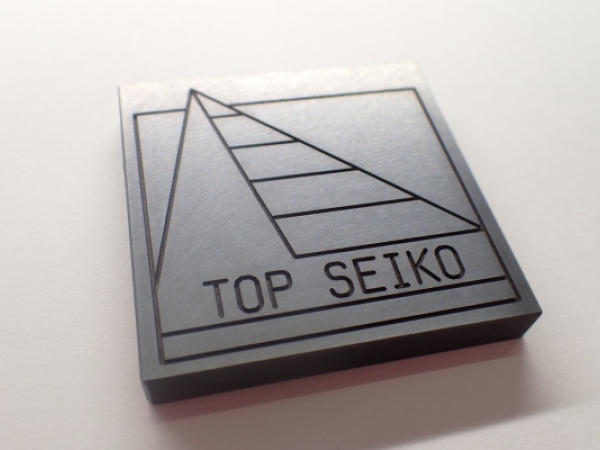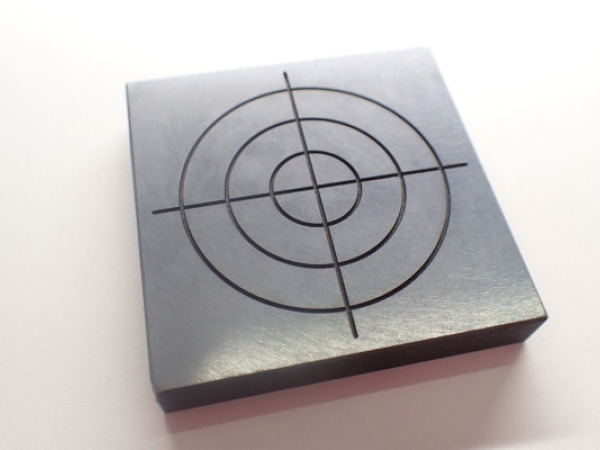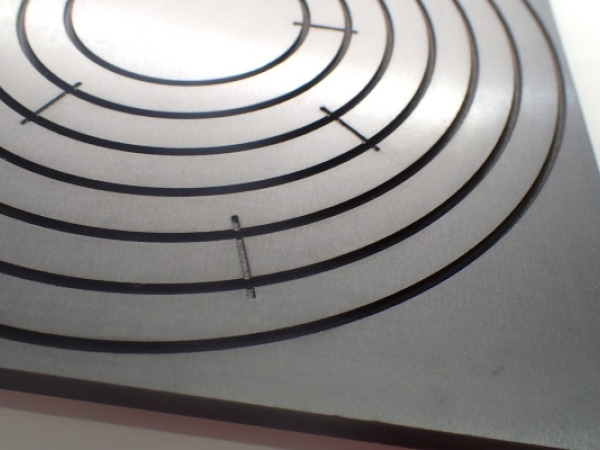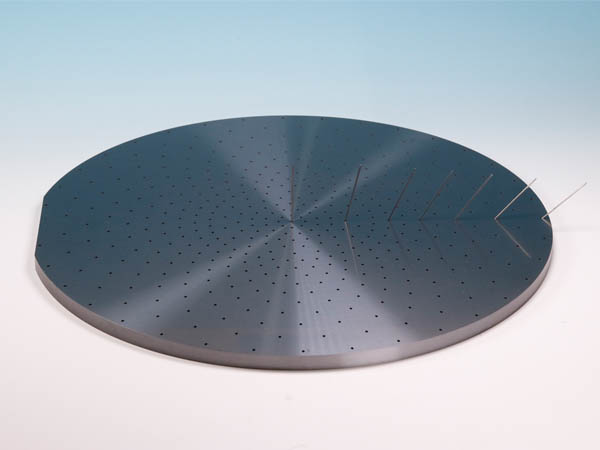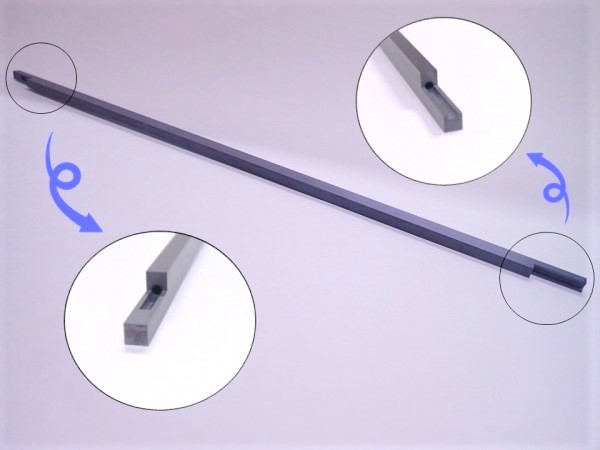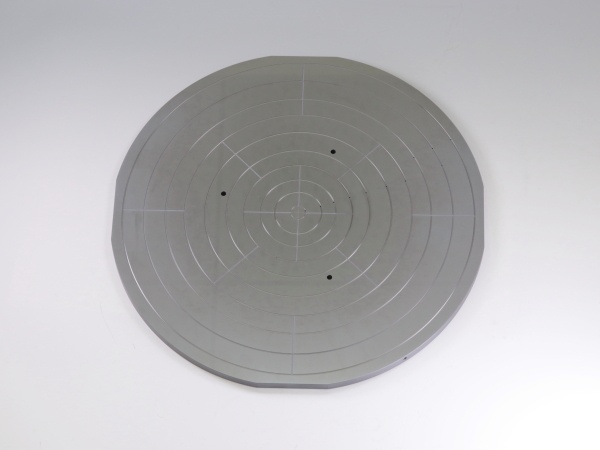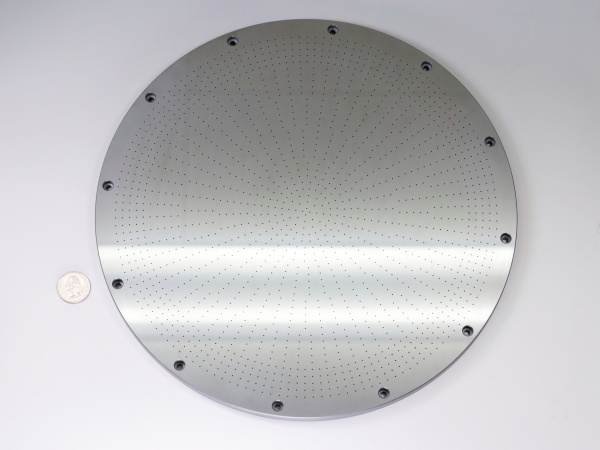
We introduce machining examples of composite materials.
We process a wide range of MMC based on SiC-Si.
Larger material sizes are available than SiC, with better cost performance.
MMC(SiSiC)
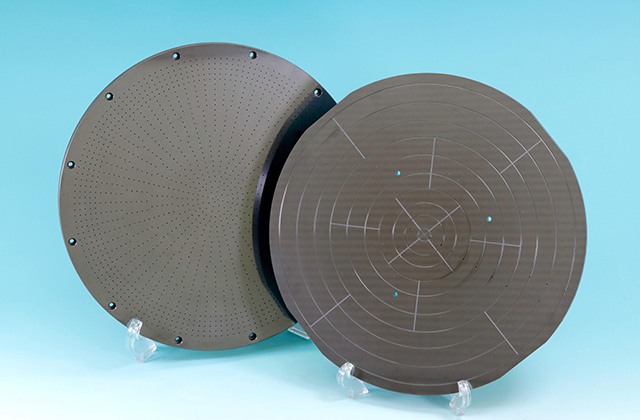
High Rigidity · Low Thermal Expansion · Heat Resistance
Compatible with Diffusion Bonding
Typical Properties of MMC
| Item | Main Component | Content Ratio (vol%) |
Hardness (HV) (GPa) |
Flexural Strength(GPa) | Fracture Toughness (MPam¹/²) |
Maximum Service Temperature (℃) |
Coefficient of Thermal Expansion (×10-⁶/℃) |
Thermal Conductivity (W/(m·K)) |
|---|---|---|---|---|---|---|---|---|
| Material Name | ||||||||
| SS501 | SiC Si |
50 50 |
- | 300 | 3 | 1,200 (Reference) |
2.8 (RT–200℃) |
175 |
| SS701 | SiC Si |
70 30 |
- | 300 | 3 | 1,200 (Reference) |
3.0 (RT–200℃) |
190 |
| Parco Ceram SI | SiC Si |
82 18 |
- | 250 | 3 | 1,350 (Reference) |
3.4 (RT~700℃) |
220 |
| SA701 | SiC Al |
70 30 |
- | 340 | 8 | - | 7.0 (RT–200℃) |
160 |
| Sintered SiC | SiC | 99 | 24 | 500 | 3 | - | 2.9 (RT) |
150 |
Applications Utilizing Material Properties
| Item | Features | Applications |
|---|---|---|
| Size |
· Larger Size than SiC Extensive Machining Track Record and Established Conditions |
· Structural Base · Fixtures · Components for High-Temperature Use · Precision Components · Heat Transfer Components · Heat Dissipation Components · Polishing Required Components · Alternative to SiC Components |
| Good Machinability | · Superior to SiC for Precision and Complex Machining | |
| Maximum Service Temperature | · Usable at High Temperatures | |
| Low Thermal Expansion | · Low Thermal Expansion with Minimal Warping and Distortion | |
| High Thermal Conductivity |
· High Thermal Conductivity for Efficient Heat Transfer · Efficient Heat Dissipation |
|
| Fewer Material Defects | · Low Material Defects due to Si Infiltration |
Machinable Sizes
| Item | Sizes (mm) | Item | Sizes (mm) |
|---|---|---|---|
| Plate Dimensions | 600 × 800 | Hole Diameter | Φ0.05– |
| Rod Dimensions | Φ50 ×400 | Hole Depth | –300 |
| Grooves | Width 0.05– | Number of Holes | –1,000 |
| Steps (Protrusions / Recesses) | –50 | Threads | M2– |