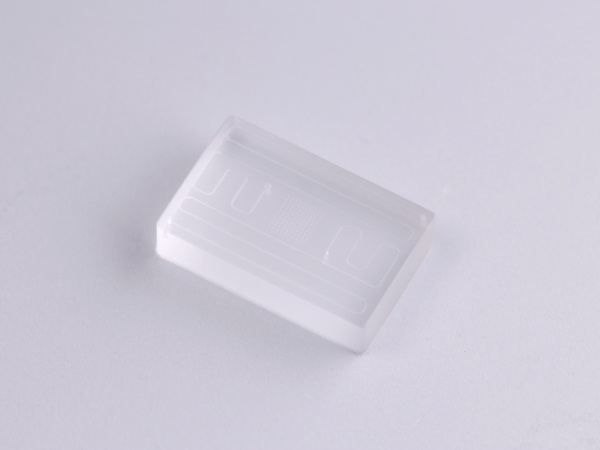
We will introduce examples of processing quartz glass and heat-resistant glass.
It is generally possible to manufacture larger materials than ceramics, and both the material costs and processing costs are often cheaper. It is often used in applications that take advantage of its thermal properties and chemical resistance.
When transparency is required for ultraviolet and infrared light transmission or visual confirmation, we outsource wrapping and polishing.
Quartz Glass · Heat-Resistant Glass
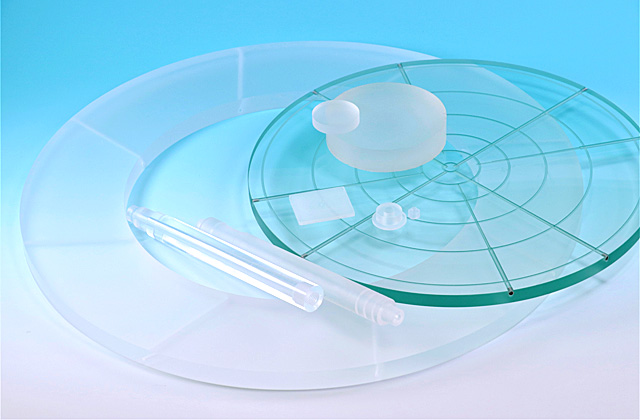
Heat resistance · Low Thermal Expansion · Electrical Insulation · Chemical Resistance
Compatible with Diffusion Bonding
Typical properties of quartz glass and heat-resistant glass
| Item | Purity SiO₂ (%) |
Vickers Hardness HV (GPa) |
Flexural Strength (MPa) | Maximum Service Temperature (℃) |
Coefficient of Thermal Expansion (×10-⁶/℃) |
Thermal Conductivity (W/(m·K)) |
Light transparency | Volume Resistivity (Ω・㎝) |
|---|---|---|---|---|---|---|---|---|
| Material Chemical Formula |
||||||||
| Quartz glass (SiO₂) |
99.99 | 9 | 94 | 1,070 (distortion point) |
0.64 | 1 | Yes | 5 ×10¹⁶ |
| Tempax | 81 | 5 | - | 518 (distortion point) |
3.2 | 1.2 | Yes | - |
Applications Utilizing Material Properties
| Item | Features | Applications |
|---|---|---|
| Maximum Service Temperature | · High Maximum Service Temperature |
· Parts used under high temperatures · High-precision parts in environments with severe temperature changes · Parts exposed to rapid heating and cooling · High temperature insulation parts · Light source peripheral parts · Window parts · Parts in reactive atmospheres · Pharmaceutical containers and pathway parts · Components for Plasma Environments · Semiconductor manufacturing equipment, etc · Parts in areas where contamination is a concern · Parts such as mirrors that are sensitive to material defects |
| Low thermal expansion coefficient | · It has a low coefficient of linear expansion, so dimensional changes due to temperature are small and warping and distortion are unlikely to occur | |
| High Thermal Shock Resistance | · Resistant to Rapid Heating and Cooling | |
| Low conductivity | · Low Thermal Conductivity with Insulation Effect | |
| Light transparency | · Transmits ultraviolet, infrared, visible light, and laser light | |
| Good Chemical Resistance |
· Quartz glass has good acid resistance · Resistant to reactive gases · Quartz glass is plasma resistant (special grade only) |
|
| High purity | · Fused silica is highly pure and free of contaminants | |
| Fewer Material Defects |
· Fewer material defects than ceramics · Surface roughness can be made mirror-like |
|
| Good Machinability | · It has good processability, a long track record of processing, and established processing conditions |
Machinable Sizes
| Item | Sizes (mm) | Item | Sizes (mm) |
|---|---|---|---|
| Plate Dimensions | 600 × 800 ×50 | Hole Diameter | Φ0.03– |
| Rod Dimensions | Φ100 × 300 | Hole Depth | 400 |
| Grooves | Width 0.05– | Number of Holes | –5,000 |
| Steps (Protrusions / Recesses) | –100 | Threads | M2~ (Requires insertion of a helical insert) |
Quartz glass and heat-resistant glass processing examples
-
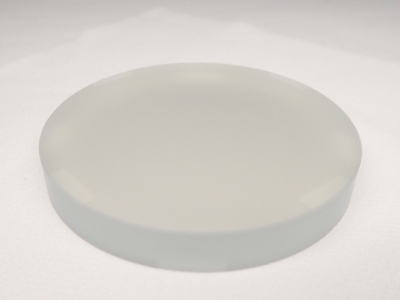
Quartz ITO film - Under development
-
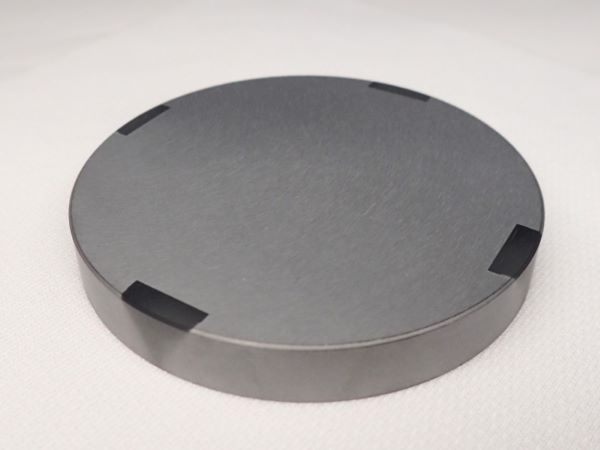
Quartz chrome film - under development
-
φ390 quartz joint - under development
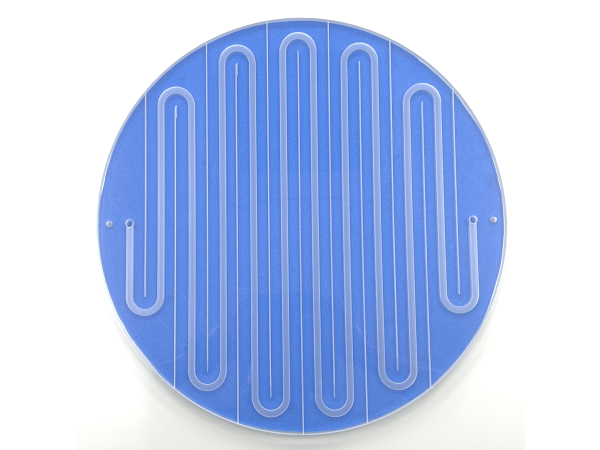
-
quartz joint - under development
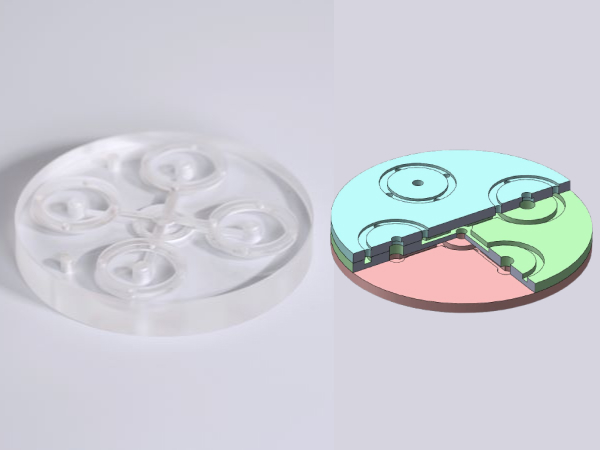
-
Quartz honeycomb structure lightweight processing
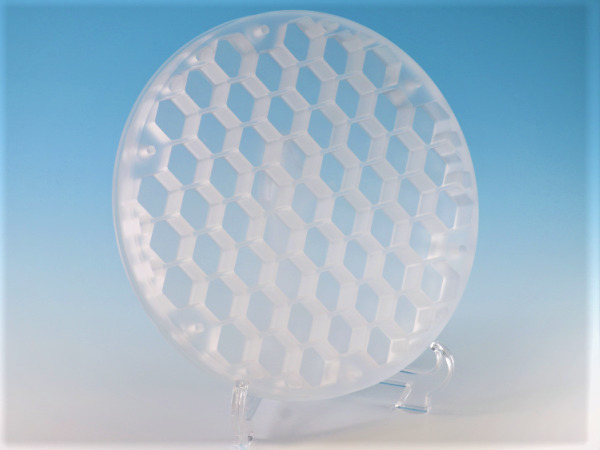
-
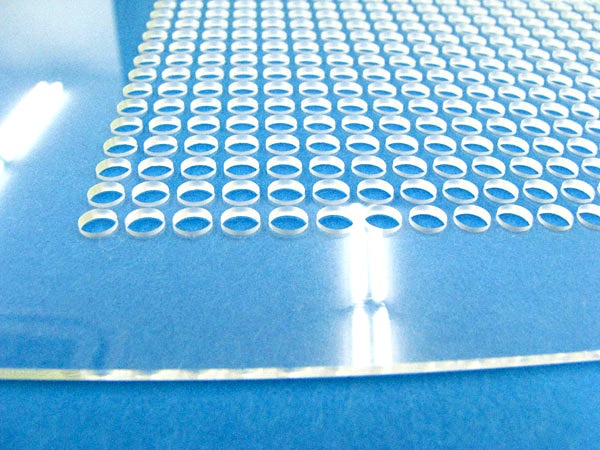
Quartz glass multi-hole
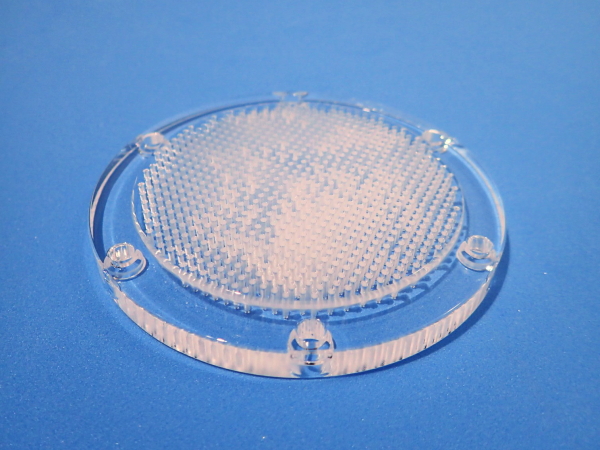
-
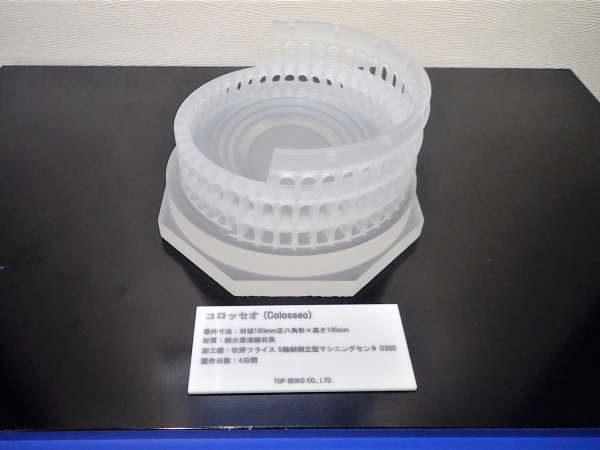
Quartz glass Colosseum
-
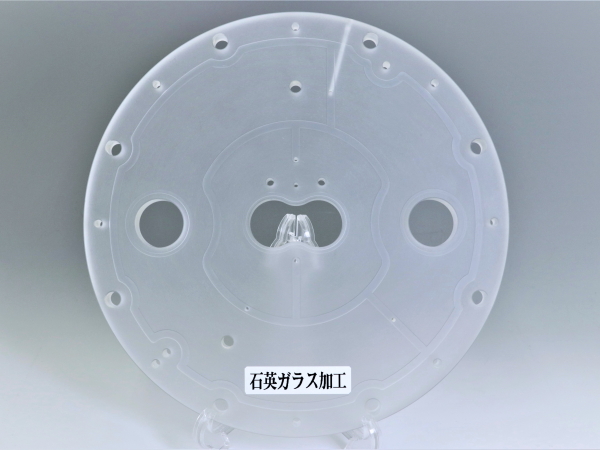
Quartz glass processed products
-
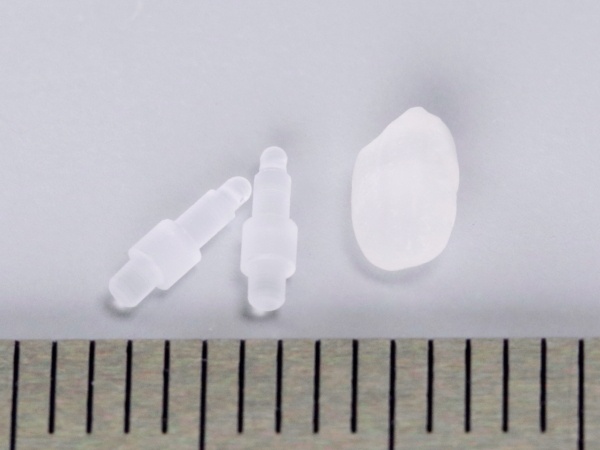
Quartz microfabricated products
-
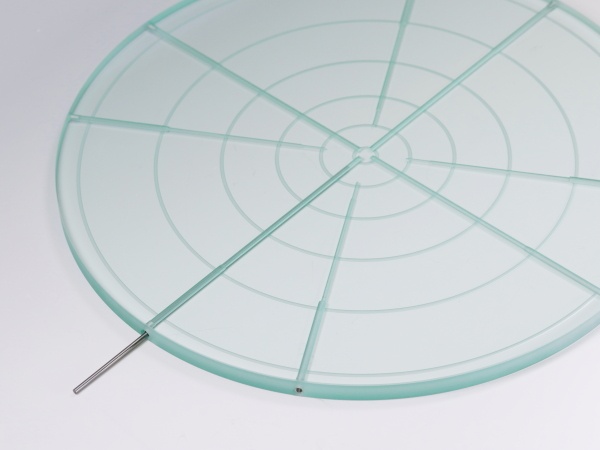
Glass deep hole processed products
-
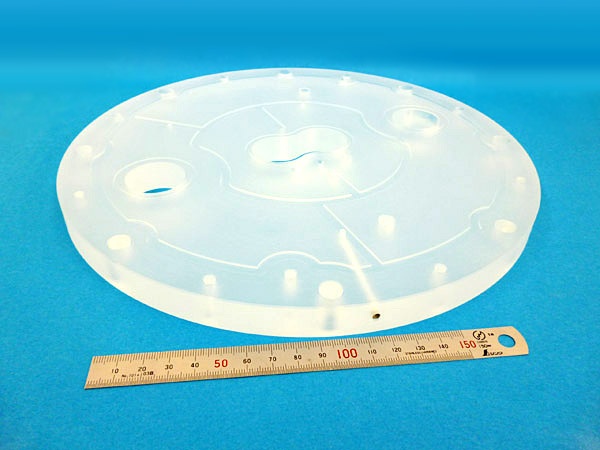
Suction Base
-
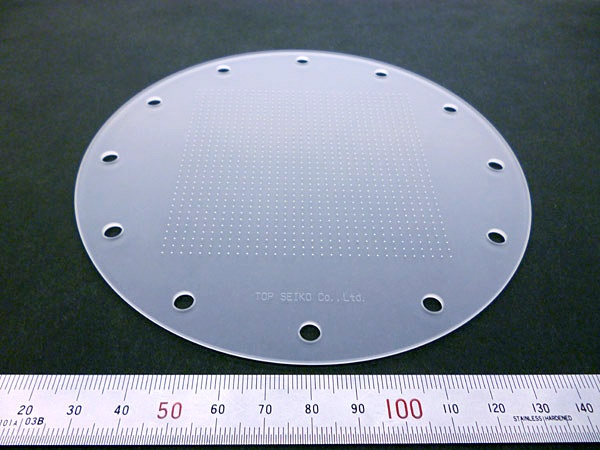
Shower Plate1
-
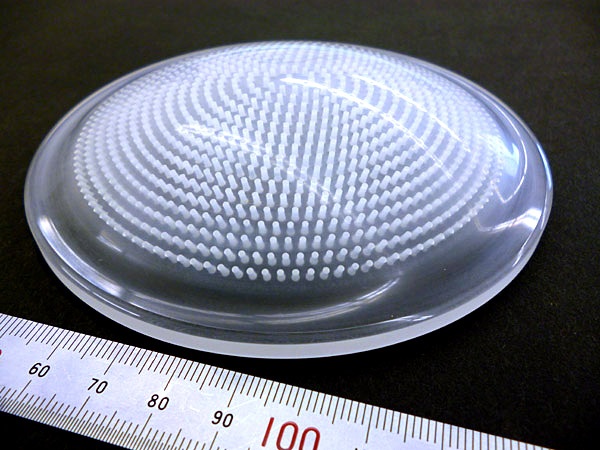
Dome-shaped shower plate
-
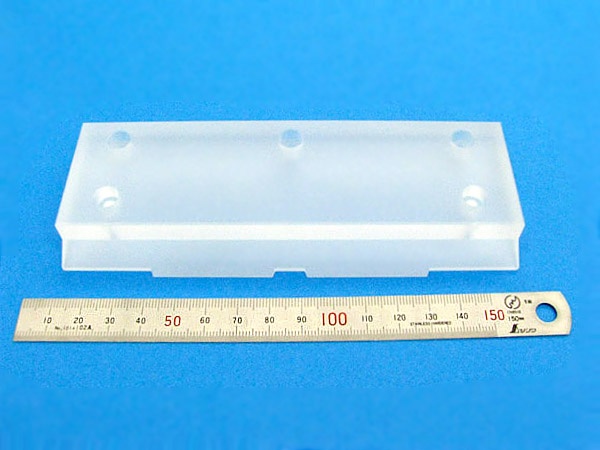
Clamp jig
-
Shower Plate 2
-
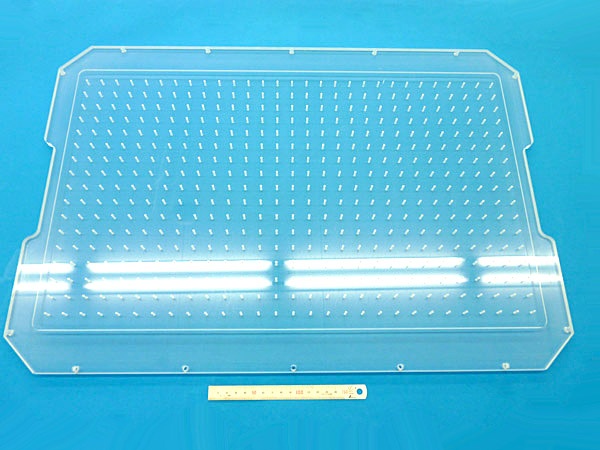
Shower Plate 3
-
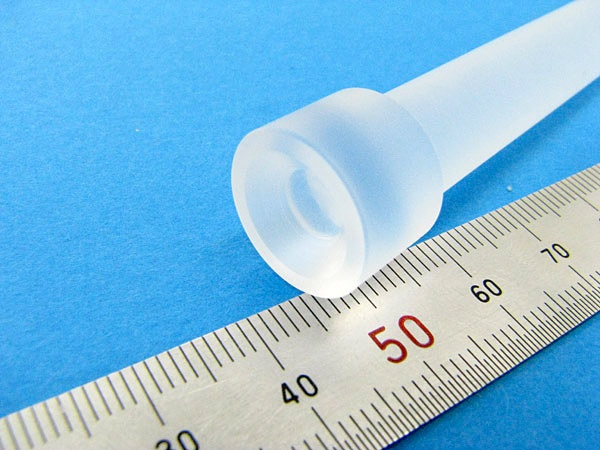
Nozzle 3
-
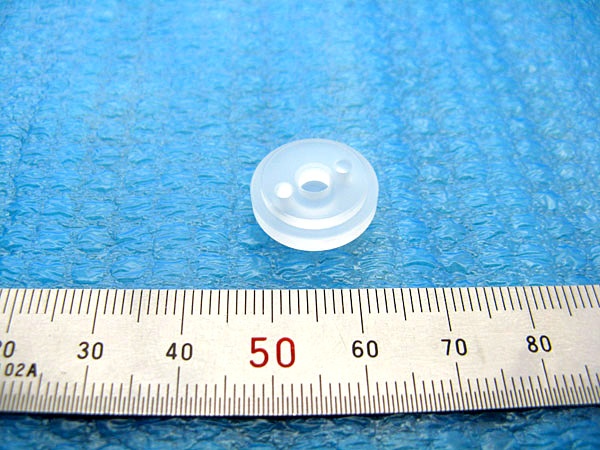
Ring
-
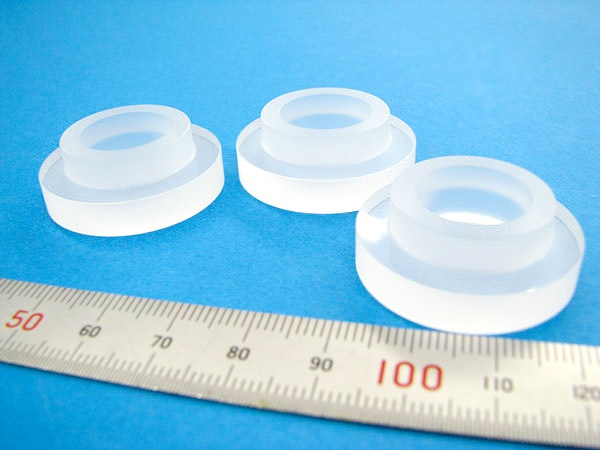
Sleeve
-
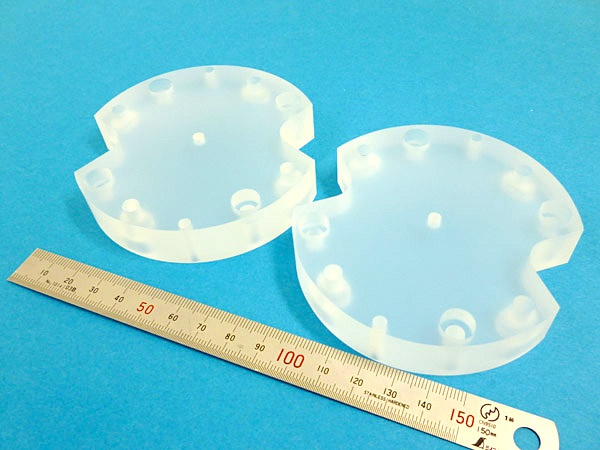
Clamp holder
-
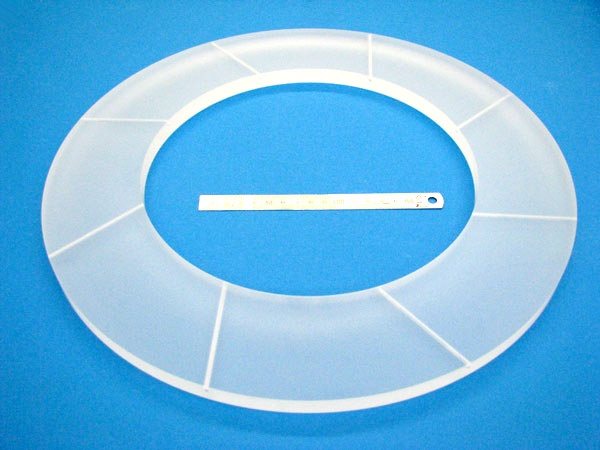
Ring (side through hole)
-
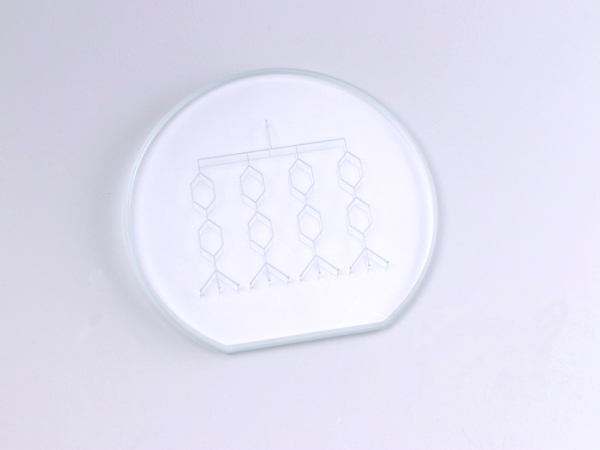
Micro chemical chip 1
-
Micro chemical chip 2